
By Ethan Lamptey, EAL Spray Finishes, Milton Keynes · Updated
Yes, you can paint uPVC windows, but uPVC is smooth and slightly flexible, so ordinary paint brushed straight on usually peels. A lasting finish needs the frame cleaned, degreased, keyed and primed with a primer made for plastics, then thin, even coats. Professional spraying does exactly that on site, from £50 a window with EAL Spray Finishes, and gives a smooth, factory-style finish in any colour without replacing the window.
Why paint struggles to stick to uPVC
uPVC frames are made to be low-maintenance, which means their surface is smooth, non-porous and slightly waxy from the factory. Paint has very little to grip onto. Frames also expand and contract with the weather, so a stiff paint film that isn't properly bonded will crack and lift.
That's why so many DIY attempts look fine for a few months and then start flaking at the corners and along the beads. Industry sources commonly report DIY finishes failing within 6 to 12 months (an industry figure, not an EAL claim). The problem is almost never the colour; it's the preparation and the products.
How to paint uPVC windows properly
Whether you do it yourself or pay someone, these are the steps that decide whether the finish lasts:
- Clean the frames with a degreaser to remove dirt, polish and any silicone residue.
- Key the surface with a fine abrasive pad so it's dull all over. A shiny patch is a weak patch.
- Wipe down again to remove dust.
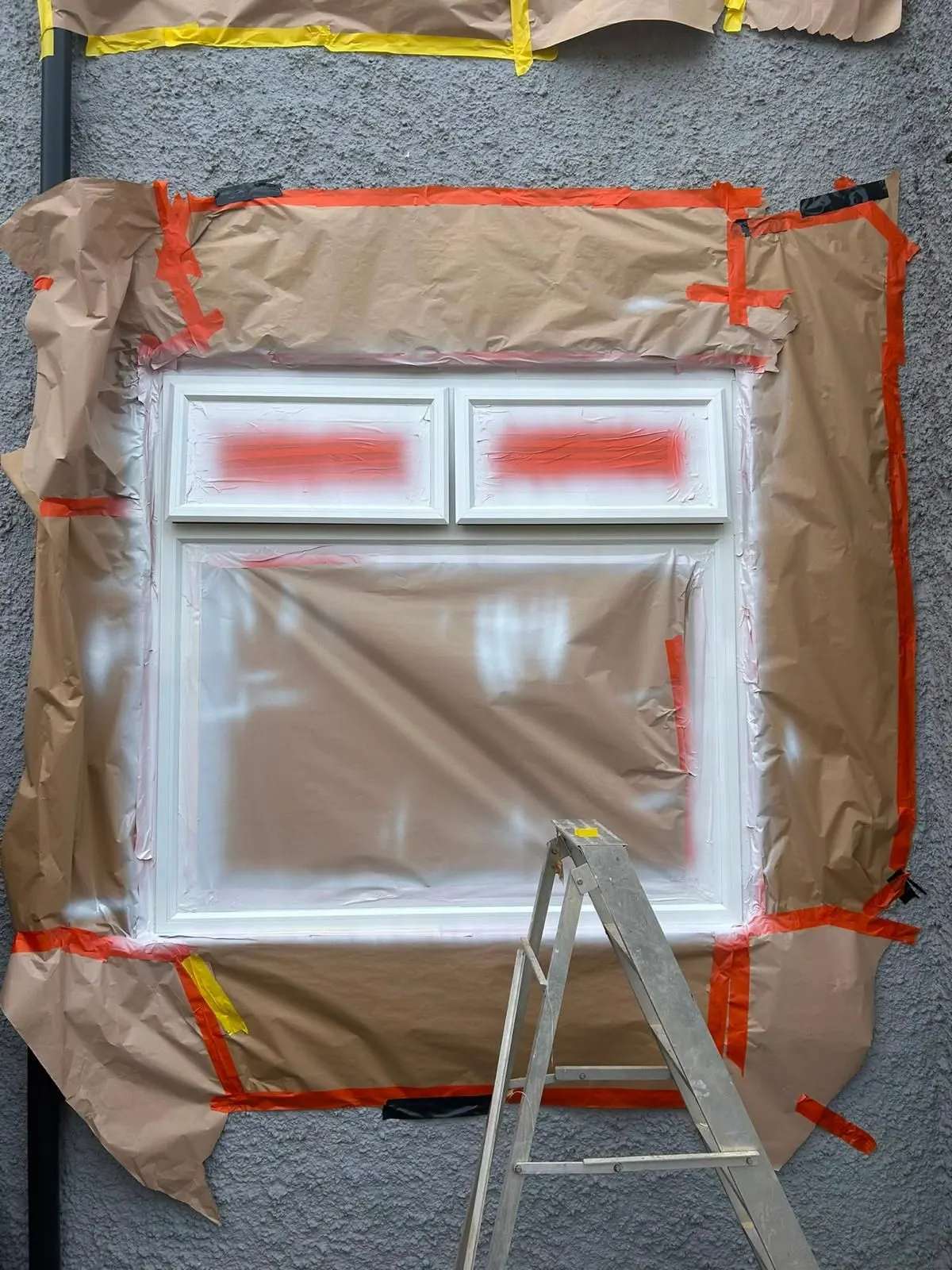
- Mask the glass, rubber seals, handles, brick and sills carefully.
- Apply a primer designed to bond to uPVC.
- Apply the colour in thin coats, letting each one dry as the product instructions say.
- Remove the masking carefully and leave the finish to cure before cleaning it.
DIY painting vs professional spraying
| DIY brush or aerosol | Professional spraying | |
|---|---|---|
| Finish | Brush marks or uneven aerosol coverage | Smooth, even, factory-style finish |
| Preparation | Often rushed or skipped | Cleaned, degreased, keyed and primed |
| Masking | Tricky around glass and seals | Glass, seals and brick fully masked |
| Colour choice | Limited to what's in the tin | Any RAL or British Standard colour |
| Typical cost | Paint, primer and kit | From £50 a window with EAL |
If you enjoy DIY and only have a shed window or a porch to do, painting it yourself can work with the right primer. For the windows and doors on the front of your house, where the finish is on show every day, most people find professional spraying is worth it.
When painting or spraying won't help
Spraying changes the colour and finish of your frames. It doesn't repair the window itself. It isn't the answer if:
- The double glazing has misted between the panes (a failed sealed unit needs a glazier).
- Frames are warped, cracked or rotten underneath.
- Windows are draughty because the seals or hinges have failed.
- Frames are sound but yellowed, faded, chalky or an old-fashioned colour: spraying is ideal.
- You want rosewood, woodgrain or white frames to become anthracite grey, black or another colour: spraying is ideal.
Weather, temperature and timing
uPVC can be sprayed for most of the year, but the conditions on the day matter. Paint goes on and bonds best when it's dry, not too cold and not too windy. Spraying onto a damp or frosty frame, or in strong wind, risks a poor finish however good the preparation is.
- Dry weather with no rain forecast during the job.
- Temperatures comfortably above freezing, with frames dry of dew.
- Low wind, especially for outside work near cars, plants and neighbours.
If the forecast turns, a professional will move the date rather than spray in poor conditions. If you're painting yourself, the same applies: wait for a settled, dry spell and follow the temperature range on the tin. Inside work, such as kitchens, is much less affected by the weather.
Popular colours for painted uPVC windows
Anthracite grey (RAL 7016) is the colour most people ask for, especially around Milton Keynes. Black (RAL 9005), agate grey, cream and greens such as Chartwell-style green are also popular. You can try them on the colour visualiser or read the anthracite grey guide.
Dark colours absorb more heat in strong sun, so very sunny elevations are worth mentioning when you get your quote.
What professional spraying costs
EAL's uPVC window spraying starts from £50 a window and front doors from £150, with no VAT added. Doing several windows together brings the price per window down. The uPVC spraying cost guide explains what affects the price.