
By Ethan Lamptey, EAL Spray Finishes, Milton Keynes · Updated
Garage door spraying with EAL Spray Finishes starts from £150, with no VAT added. Replacing a garage door typically costs £800 to £2,500. The price of a respray depends on the size of the door (single or double), its material, and how much preparation it needs, especially if there's rust or peeling paint. Most up-and-over, roller and sectional doors can be sprayed on site in any colour, often to match newly sprayed windows.
Garage door spraying prices
| Option | Typical cost |
|---|---|
| Garage door respray with EAL | From £150 |
| Single garage door respray (market) | £200–£450 |
| Double garage door respray (market) | £350–£600 |
| New garage door, supplied and fitted (market) | £800–£2,500 |
A double door, a pair of single doors or a door that needs rust treatment will be priced higher than the starting figure. Combining the garage door with your windows or front door in one visit brings the price per item down. See garage door spraying.
Steel, GRP and timber garage doors
- Steel up-and-over doors are the most common on estates around Milton Keynes. They spray very well once any rust is treated and the surface is keyed and primed.
- Roller and sectional doors can be sprayed too. The slats or panels are masked and sprayed carefully so the door still runs freely.
- GRP (fibreglass) doors take a sprayed finish well after cleaning and a suitable primer.
- Timber doors need sound wood. Rotten panels should be repaired first, and the bare timber needs priming before the colour goes on.
Rust, peeling paint and dents
Peeling paint is the most common reason people call about a garage door. It almost always comes from poor preparation or DIY paint that never bonded properly.
- Loose and flaking paint is removed back to a sound surface.
- Rust spots are treated and primed so they don't come back through the new finish.
- Small marks are smoothed so they show less, but spraying won't remove deep dents. A badly damaged door may be better replaced.
- Brickwork, the drive and the frame are masked before spraying.
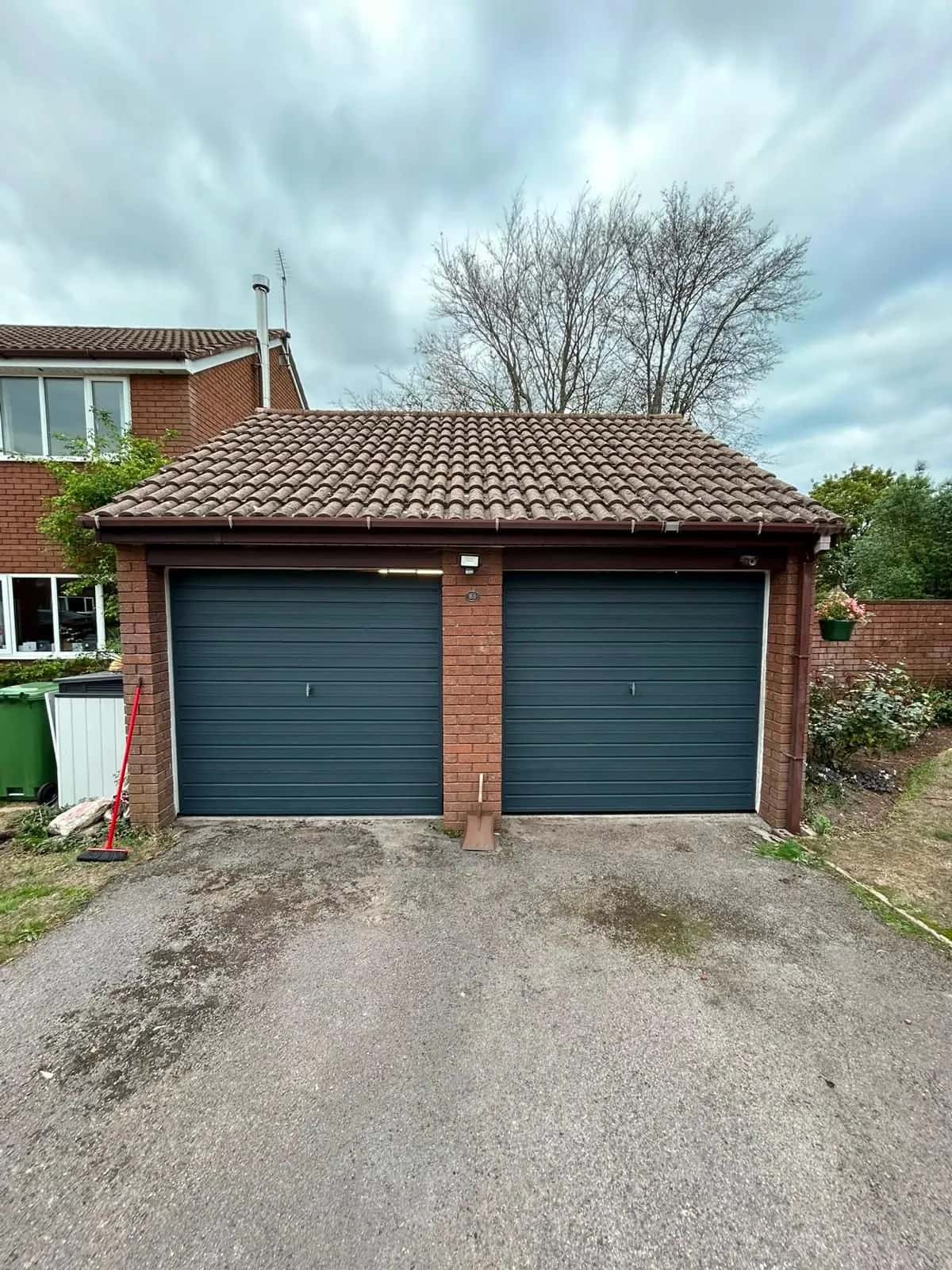
You can see a real example in the peeling cream to anthracite garage doors case study, and a plain white pair sprayed satin anthracite in white to anthracite garage doors.
Is it better to spray or paint a garage door?
You can brush-paint a garage door yourself with the right metal paint, and for a quick refresh that's fine. Spraying gives a smoother, more even finish with no brush marks, covers the ribs and panels of up-and-over and sectional doors evenly, and suits colour changes such as cream to anthracite grey.
Whichever you choose, preparation is what makes the finish last: removing loose paint, treating rust, keying and priming. That's where most DIY jobs fall short and start peeling within a year or two.
Matching the garage door to your windows
A garage door is often the biggest single block of colour on the front of a house. On many Milton Keynes estates every garage door is the same cream or white, so changing it makes a big difference.
Popular combinations are anthracite grey windows with a matching anthracite garage door, or white windows with a black garage door. Try them on the colour visualiser or read the anthracite grey guide.
Getting a garage door quote
Garage doors are easy to price from photos. Send these on WhatsApp or through the quote form:
- A straight-on photo of the whole door, plus one at an angle so the panels or ribs show.
- A close-up of any rust, peeling paint or damage.
- Whether it's a single or double door, and the type: up-and-over, roller, sectional or side-hinged.
- The colour you'd like, and whether you want the windows or front door matched at the same time.
- Your postcode.
If the door needs repairs before it can be sprayed, such as replacing a rotten timber panel or fixing a broken spring, you'll be told so you can get that done first.
When replacing the door makes more sense
- Door opens and closes properly: a good candidate for spraying.
- Paint is faded, chalky or peeling: spraying fixes this.
- Surface rust in spots: treated and primed before spraying.
- Rusted through, holed or badly dented panels: replacement is usually better.
- Broken springs, tracks or motor: that's a repair for a garage door engineer, not a sprayer.